Industry Projects
Construction Projects
Shelves Structure Rack Structure
Internship Program-Project Program-Product Dev, Program


UNIT III
Four Exmples from Text Book will be given trainingOn software listed For the program Four problem will be given for self training with software to Trainee
The relevance of strength calculations is now beyond doubt, and this fact is due to the needs of the modern market. A cost-effective approach to the use of materials in the design of racking structures, on the one hand, and ensuring the safety and security of the cargo, on the other hand, make it necessary to carry out such calculations.
The calculation of racks is carried out taking into account the following criteria:
a) Strength criterion. At the specified design loads, the equivalent stresses occurring in the structural elements should not exceed the design resistance of the material used:
σmax≤ [σ];
[σ] = σt /1.05,
where 1.05 is the reliability factor for the material (SP 16.13330.2011, Table 3).
b) Criterion of rigidity. The maximum total displacements in the structure should not exceed the permissible limit. Clause 3.5 of GOST 28766-90 states that the elastic deflection of the shelf transom from the gravitational forces of the loads in their standard value should not exceed 1/200 of the span of this transom:
fmax≤ [f].
c) Criterion of stability. The stability of the idealized linearly elastic frame model must be ensured (KArticles ≥ 1.3 according to SP 16.13330.2011, clause 4.3.2 taking into account clauses 4.2.5, 4.2.6).
Also, when calculating racks, it is necessary to take into account the influence of local effects, such as local loss of stability or local collapse of a structural element.
Methods and approaches to the calculation of racks
In September 1995, the European Maintenance Federation (FEM) completed the preparation of a regulatory document describing the calculation, testing and design of metal storage racks. It systematizes the methods for calculating racking structures and sets out the requirements for technological processes related to the control of materials, production, assembly and installation of warehouse racking systems, specifies the safety and quality conditions that must be observed by manufacturers and installers. This document, FEM 10.2.02, is still a preliminary recommendation, but most European countries have already approved it and adopted it as a valid standard that serves to achieve the highest level of safety in warehouses.
In turn, in Russia, in 1992, GOST 28766-90 was adopted, which establishes the basis for the calculation of steel structures of stationary racks. Testing of the strength, stability and rigidity of the rack elements is carried out according to the method of SNiP II-23-81 "Design Standards. Steel Structures". Standard and design loads are accepted in accordance with SNiP 2.01.07-85 "Loads and Impacts".
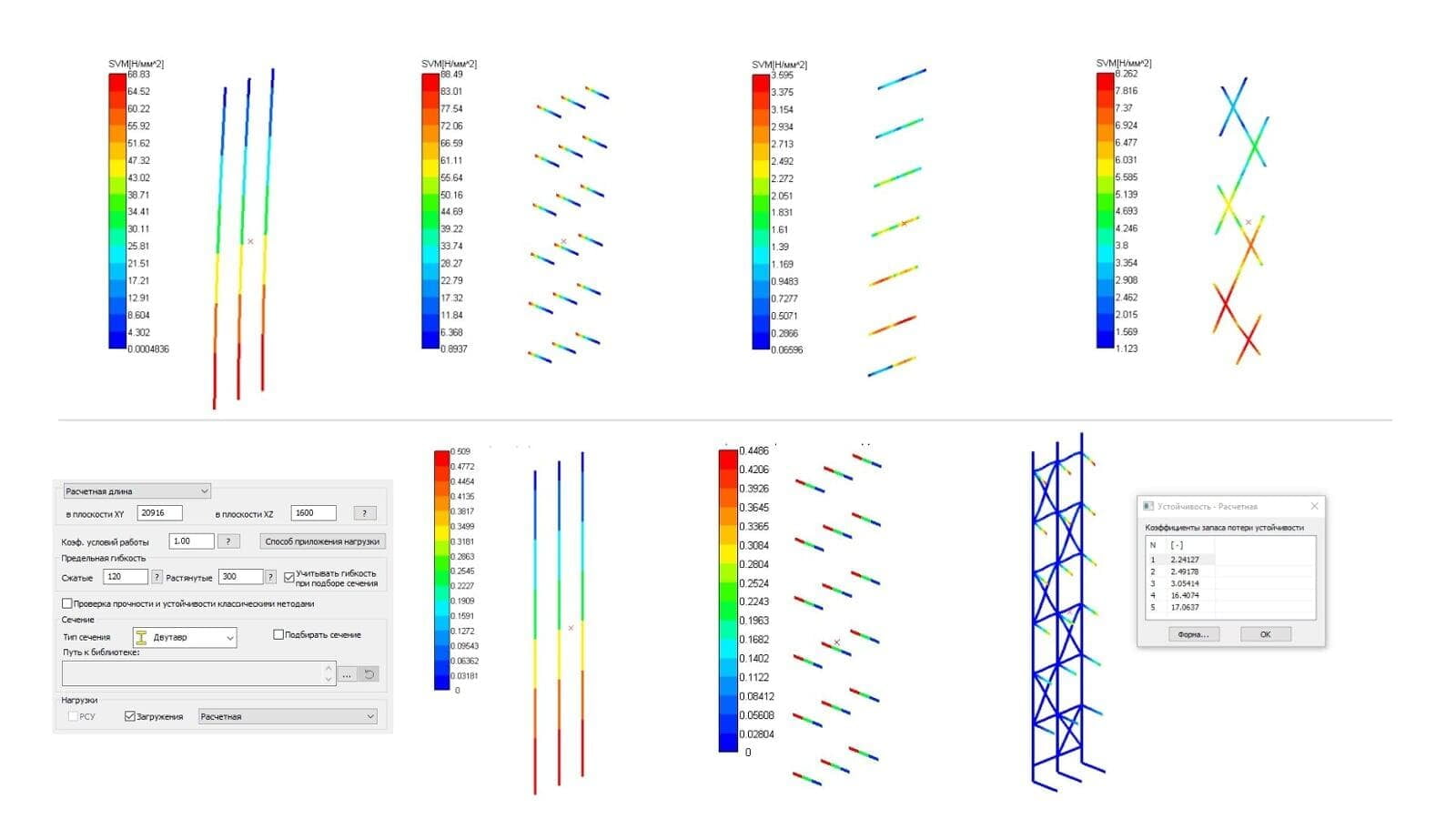
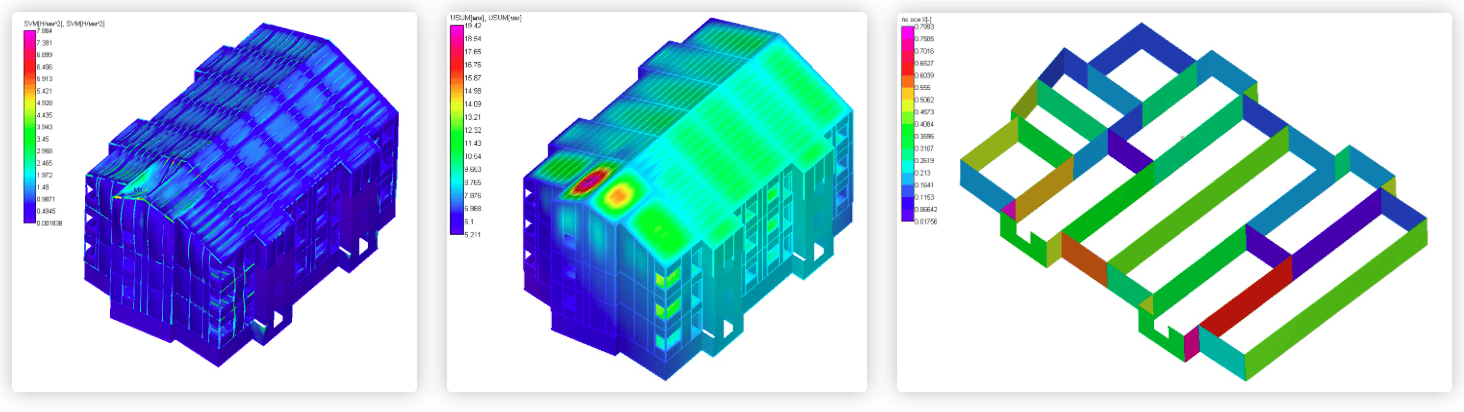
The calculation according to these norms should include the calculation of VAT on the rack structure. On the one hand, the design of the rack can be represented as a simplified rod model and the calculation can be carried out by means of "strength of materials". But for a comprehensive analysis of the structure, which also includes the calculation of general stability, local collapse effects, loss of stability of the wall or flange of the element, it is impossible to do without automated calculation tools using a software product.
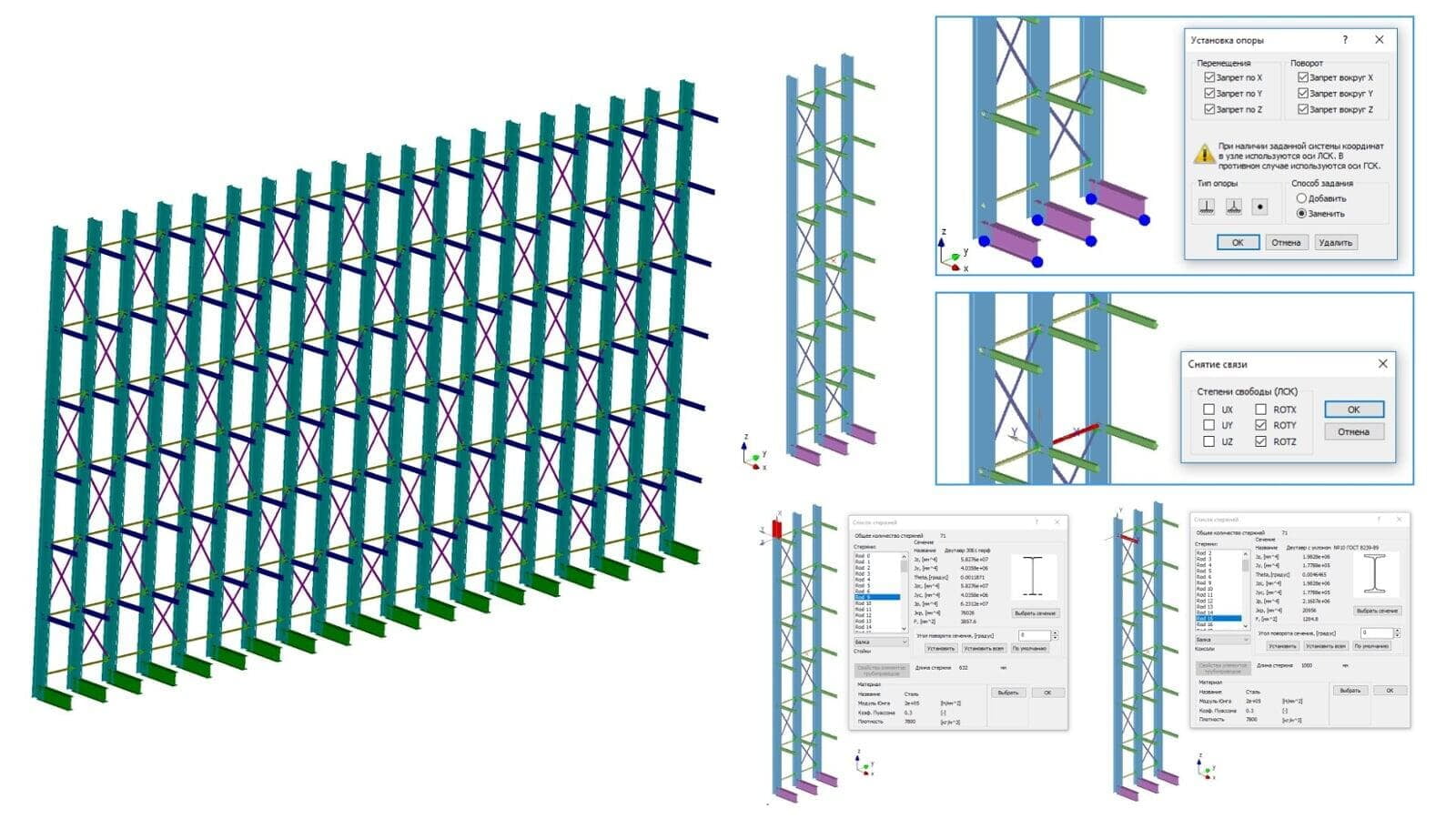
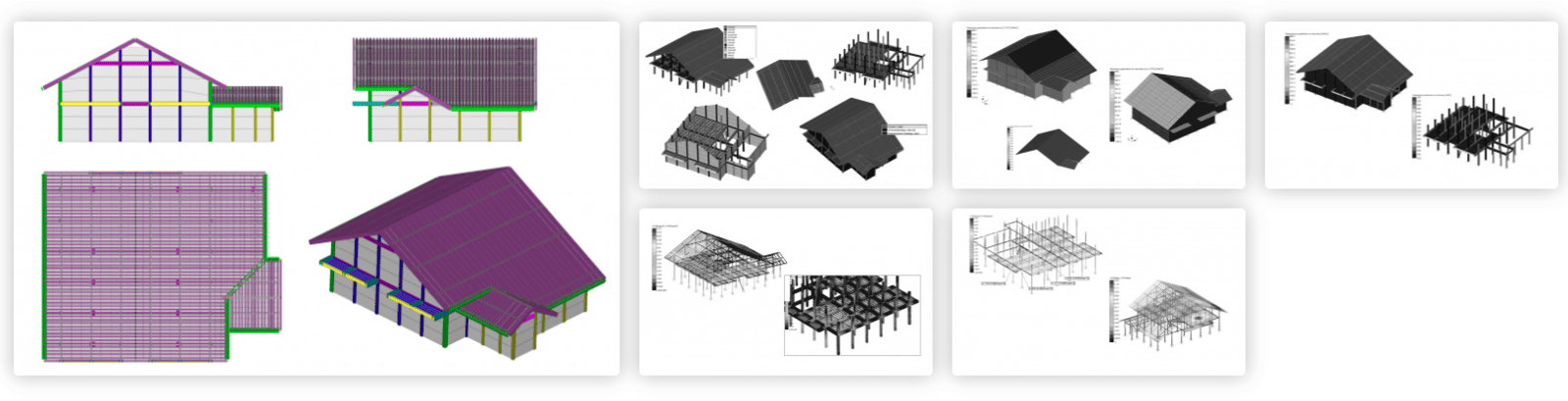
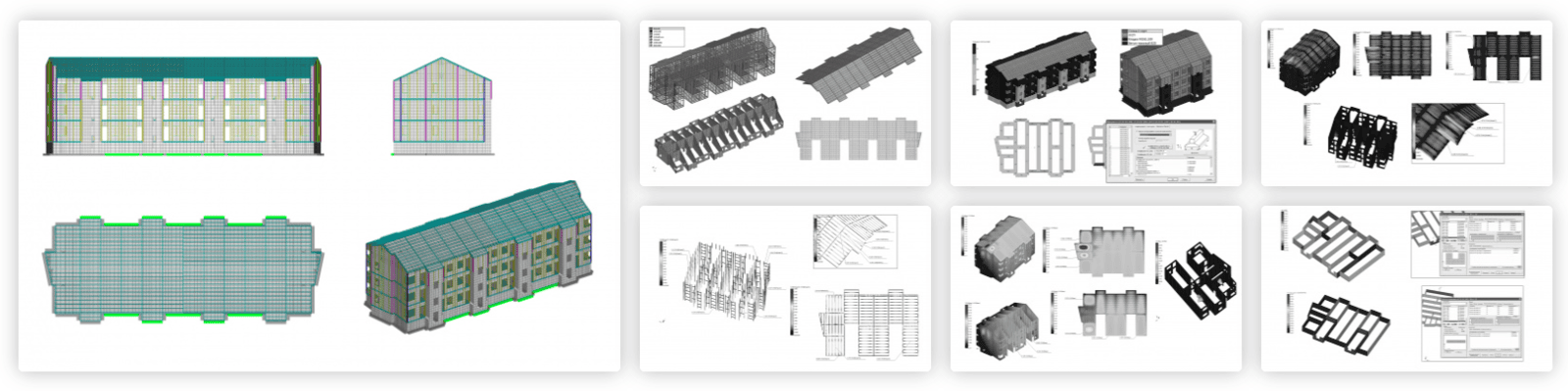
APMStructure3D is a module for the calculation of the stress-strain state, stability, natural and forced oscillations of parts and structures using the finite element method. This module is part of APM Civil Engineering, a computer-aided structural analysis and design system for industrial and civil construction. The system allows you to carry out both verification calculations of rack structures and assessment of the maximum bearing capacity, as well as expertise of collapses of racks of any type.
Racking can be calculated in accordance with Russian standards (GOST 28766-90, SNiP II-23-81) and in accordance with European standards (FEM10.2.02). But there are several fundamental differences between them, consisting in approaches to the calculation of racks for strength. These differences are described below.
a) Setting loads
As for the loads, the differences between the standards lie in the reliability coefficients
UNIT I
Four Exmples from Text Book will be given trainingOn software listed For the program Four problem will be given for self training with software to Trainee
Warehouses are of great importance in modern logistics.
First of all, it is for the redistribution of cargo traffic. It is warehouses that make it possible to accumulate and concentrate goods, making transportation expedient and efficient.
They allow you to always have the right goods at hand, shipping them as soon as an order is received from consumers.
Cargo storage is carried out on special devices (racks) designed for storing items and materials, consisting of multi-tiered flooring fixed on racks. Modern racks are oriented to minimize the occupied area and optimize access to stored items and materials.
The company STC "APM" performs strength calculations of racks of all types, as well as conducts examinations of collapse.
UNIT IV
Four Exmples from Text Book will be given trainingOn software listed For the program Four problem will be given for self training with software to Trainee
Of considerable interest are bending thin-walled perforated sections, in which the loss of local stability in the flange or in the wall occurs before the general loss of stability in the most loaded elements. The strength and stability of racks and beams with a similar cross-section is checked using the geometric characteristics of the effective cross-sectional area (Aeff, Ieff, Weff) calculated without taking into account the compressed sections of the plates for which local stability is not provided. The effect of shear lag must also be taken into account when determining the effective cross-sectional areas of the compression and tension flanges of a beam.
Taking into account the effective cross-sectional area is not provided for in Russian standards. The effective cross-section area can be taken into account using the Eurocode, but this method is a very time-consuming manual calculation and is not even possible for some types of cross-sections. One of the alternatives that allows you to take into account the phenomenon of local buckling is to simulate the strut elements using plates and further analyze the stability. According to clause 9.2.4 EN15512 open thin-walled sections under the influence of compressive load are subject to local (local) buckling, as well as loss of stability of the cross-sectional
The calculation according to SNiP II-23-81 is carried out for a beam with a hinged support. The load reliability factor is 1.2.
According to EN15512/ FEM10.2.02, the calculation is carried out taking into account the half-hinged support (in this case, the stiffness of the beam connection is set).
The load reliability factor in this case is 1.4.
The calculation of pallet beams in accordance with European standards shows higher values of safety factors and lower total displacements.
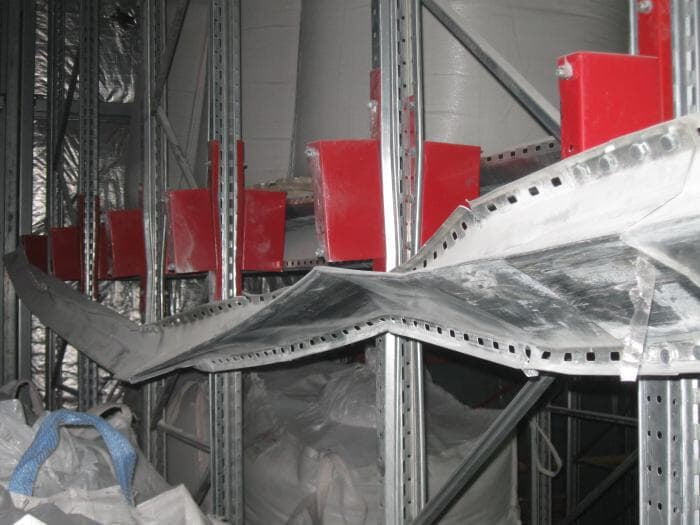
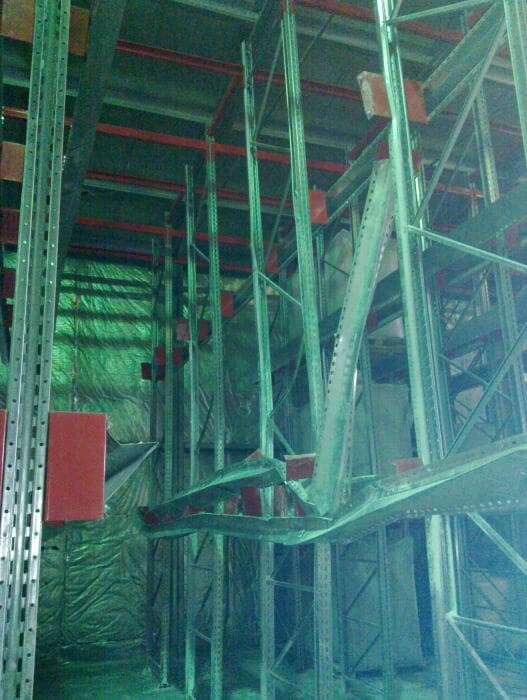
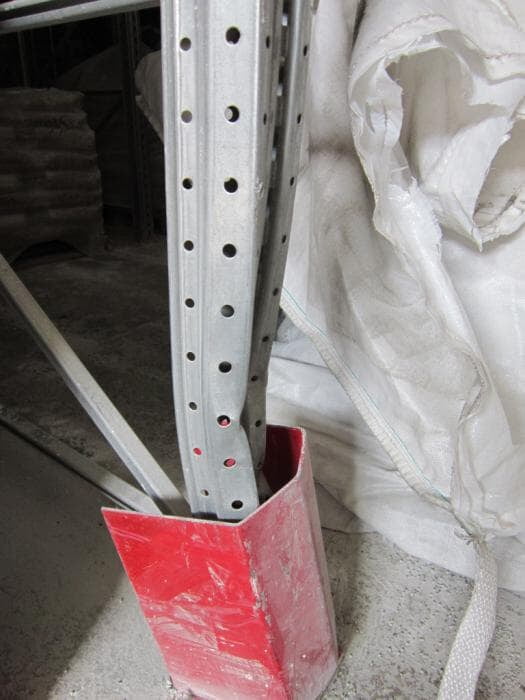
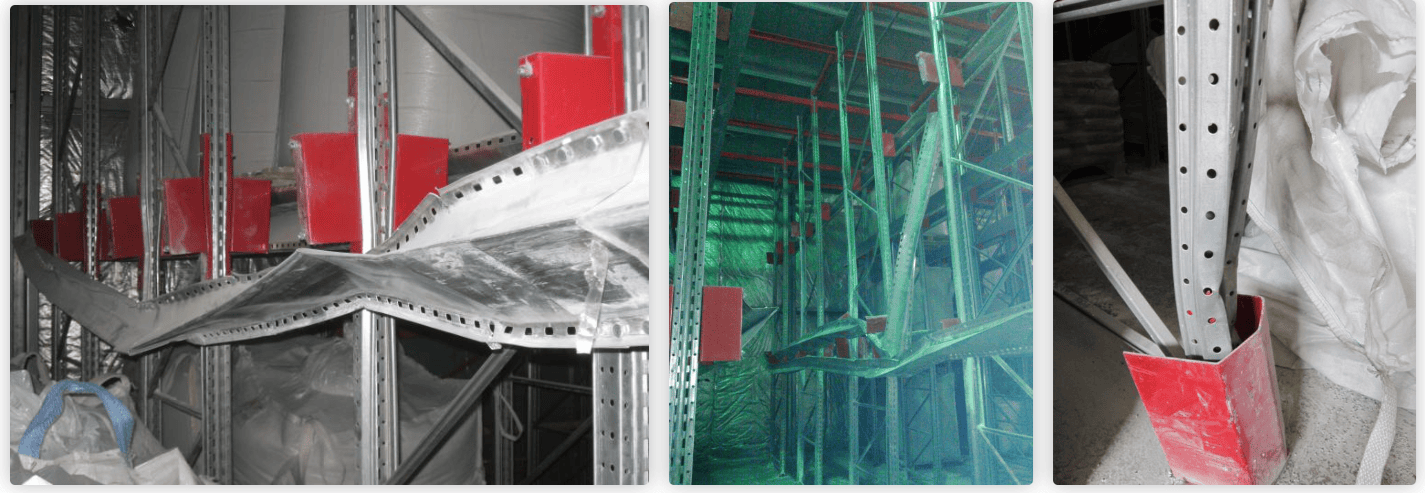
Expertise of collapse - possible causes
The collapse of racks is not uncommon. Usually, warehouse owners try not to advertise such emergencies. The cause of the collapse, as a rule, is non-compliance with the requirements for the safe operation of racking equipment.
In most cases of collapse of warehouse racks, the cause is the improper work of operators of floor equipment.
A less common cause of collapse is the overload of the rack. There are two options here, either the overload occurred accidentally (the weight of the cargo was incorrectly indicated, the error of the operator or dispatcher, etc.), or the declared bearing capacity does not correspond to the actual one. In such cases, a qualified independent examination is required, which will identify the cause of the incident.
By meeting the requirements for the timely identification of damaged elements of racking equipment and their replacement, as well as the requirements for the control tightening of bolted joints, it is possible to reduce the risk of collapse. Also, special attention should be paid to checking the availability of certification of racking equipment during operation and the availability of test protocols for the racking system (protocols for checking the load-bearing capacity in accordance with the documentation of the supplier of the racking system).
Recently, cases of rack collapse have become much more frequent. This is due to both a significant increase in storage capacity and, as a result, the volume of racking equipment, and the obsolescence of equipment (in Russia, racks are operated for an average of 3-8 years, as a rule, even without minimal maintenance).
UNIT II
Four Exmples from Text Book will be given trainingOn software listed For the program Four problem will be given for self training with software to Trainee
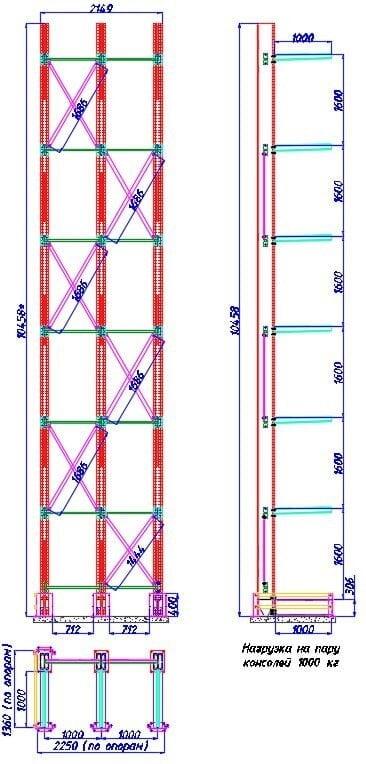
Depending on the purpose, racks are divided into several types:
Pallet racks are a convenient and functional structure for placing goods on pallets. Pallet racking structures can be divided into front and deep. Front-end ones are considered more versatile and more convenient when working with fast-moving products. In addition, front racks for a warehouse can significantly increase the efficiency of using warehouse space. Deep racks are designed for the turnover of homogeneous cargo and allow you to maximize the load of the warehouse.Shelf racks are a type of racks used for storing piece and manual processing in a multi-product warehouse of piece products: containers, boxes, etc.Mobile racks are structures designed for rooms with a limited volume, requiring the organization of a system with the ability to classify its contents. Such shelving systems are ideal for various archives and libraries.Cantilever racks are used for storing oversized long cargo. Such goods are placed with the help of special equipment.Gravity racks are a special type of pallet racks, equipped with special roller tracks, inclined at a slight angle to the horizon (3 – 5 degrees) so that pallets roll down from the loading area to the unloading area under the influence of gravity.Mezzanines are equipment that, thanks to its multi-tiered structure, helps to maximize the use of the entire warehouse area