Industry Projects
Mechanical Projects Oil & Gas Equipment
Air Coo;er
Internship Program-Project Program-Product Dev, Program

APM WINMACHINE APM CIVIL APM FEM


UNIT I
Four Exmples from Text Book will be given trainingOn software listed For the program Four problem will be given for self training with software to Trainee
Air Cooler
The calculation of the air cooler was carried out by order of Borkhimmash OJSC.
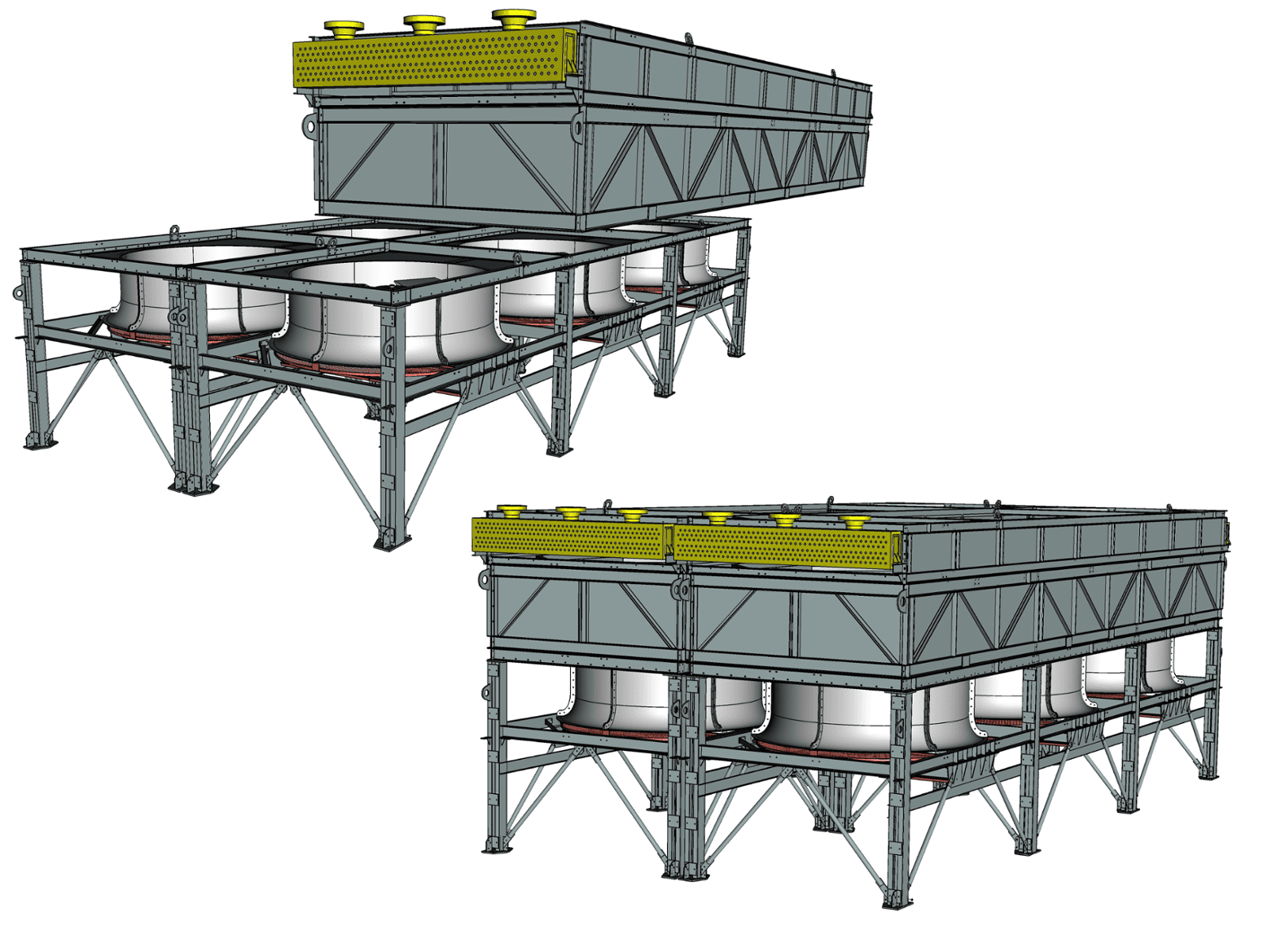
Air cooler is a block-modular heat exchanger designed for condensation of liquid, gaseous and vaporous media, as well as for their cooling. The cooled process product moves inside the bimetallic finned tubes, transferring heat through their walls to the cooling agent. Atmospheric air is used as a cooling agent.
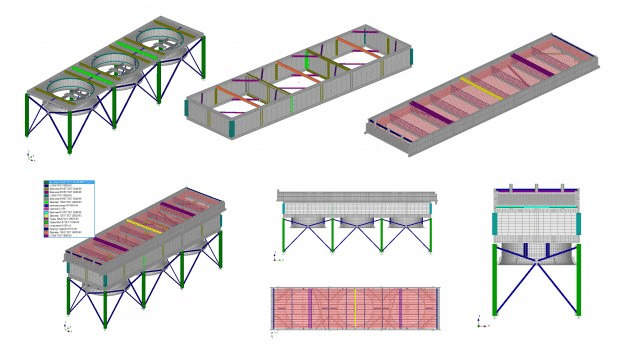
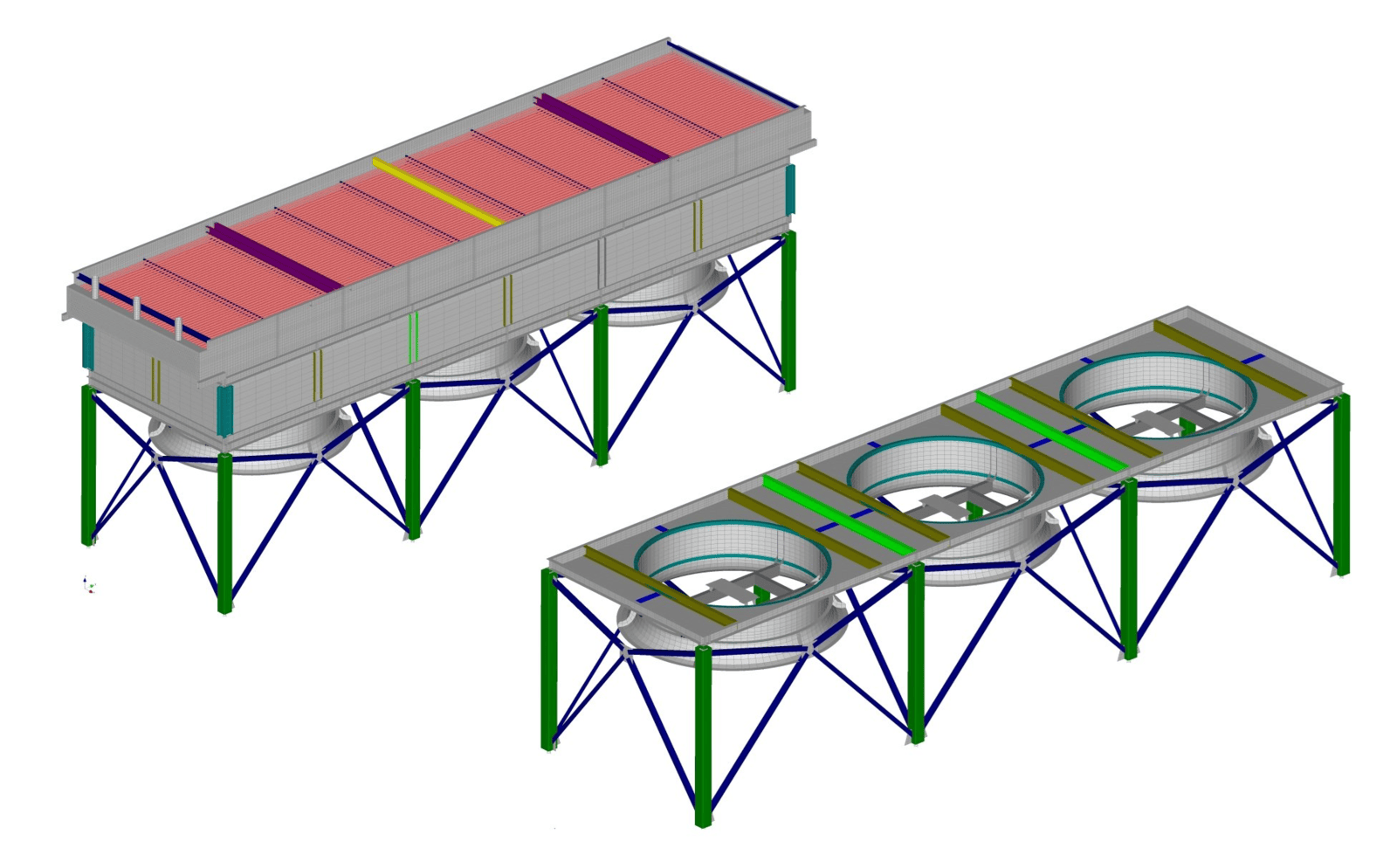
The design of the air cooler consists of a metal structure module, on which 3 electric motors with fans are installed to supply the cooling agent to the heat exchange section (section module). The section has 267 tubes in which the process product moves.
Installation location of the air cooler: Russia, Anapa (South Stream gas pipeline, Russkaya compressor station).
Geometric dimensions:
length 12,100 mm;width 3000 mm;Height 4960 mm.
The following regulatory documents were used in the process of project implementation:
GOST R ISO 13706-2006 Air-cooled devices. General technical requirements.SP 16.13330.2017 "Code of Rules. Steel structures. Updated edition".SP 20.13330.2016 "Code of Rules. Loads and impacts. Updated edition".SNiP II-7-81 Construction in Seismic Areas.
The calculation was carried out in the APM WinMachine software product.
UNIT IV
Four Exmples from Text Book will be given trainingOn software listed For the program Four problem will be given for self training with software to Trainee
Results of the completed project
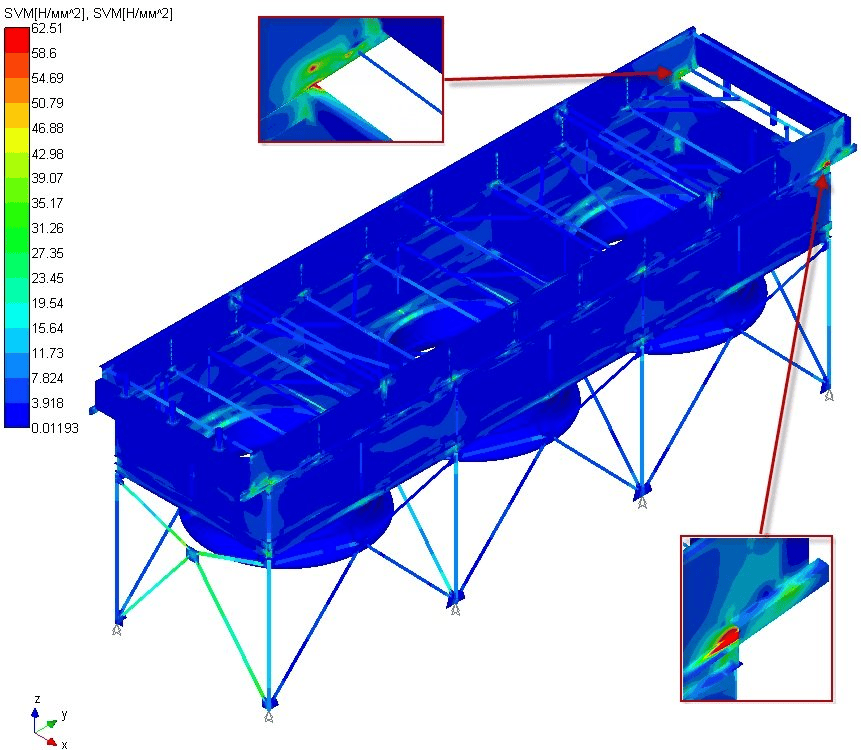
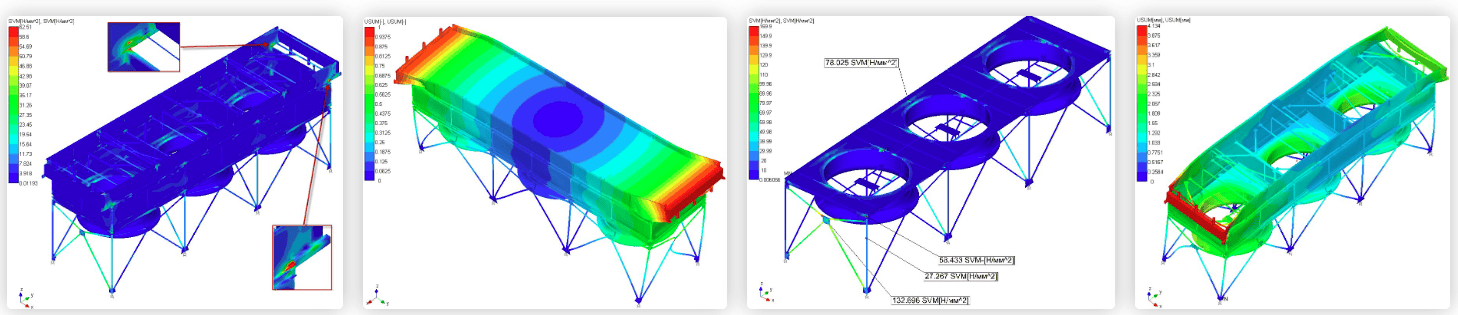
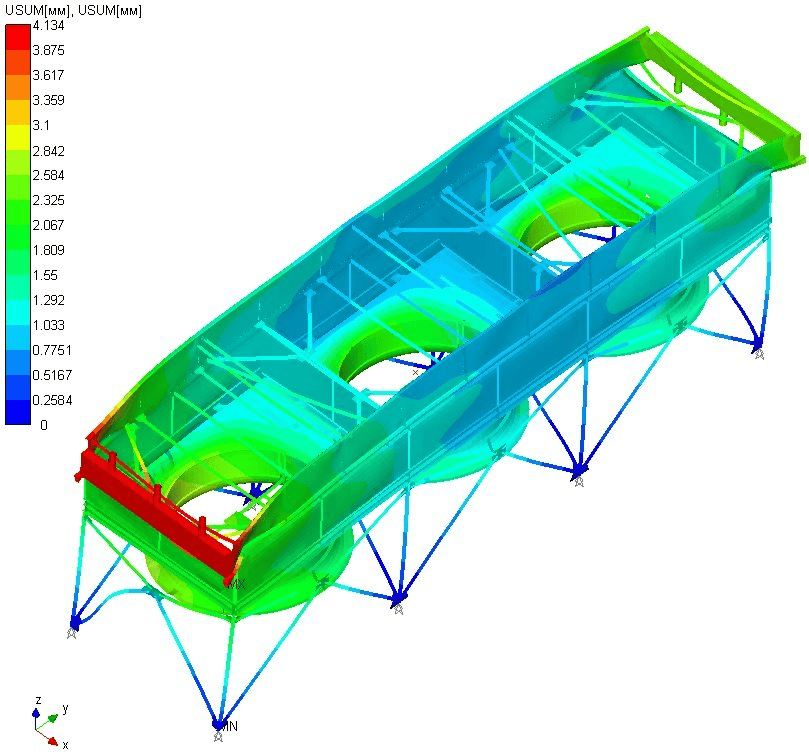
Analysis of the results of the static calculation showed that at the specified design loads, the equivalent stresses arising in the structural elements of the air cooler do not exceed the design resistance of the materials used, i.e. the required strength is provided.
The design of the air cooler is also able to resist seismic loads.
Foundation bolts meet the strength criteria.
Checking the load-bearing capacity of the most loaded structural elements showed that all the coefficients of working conditions have values less than one, which is acceptable and indicates the acceptable operation of the elements. Thus, it can be concluded that the bearing capacity of these structural elements is ensured.
Summarizing the results obtained, it can be concluded that the design of the air cooler is capable of bearing the loads applied to it, and does not require additional measures to increase the strength characteristics.
UNIT II
Four Exmples from Text Book will be given trainingOn software listed For the program Four problem will be given for self training with software to Trainee
Calculation model
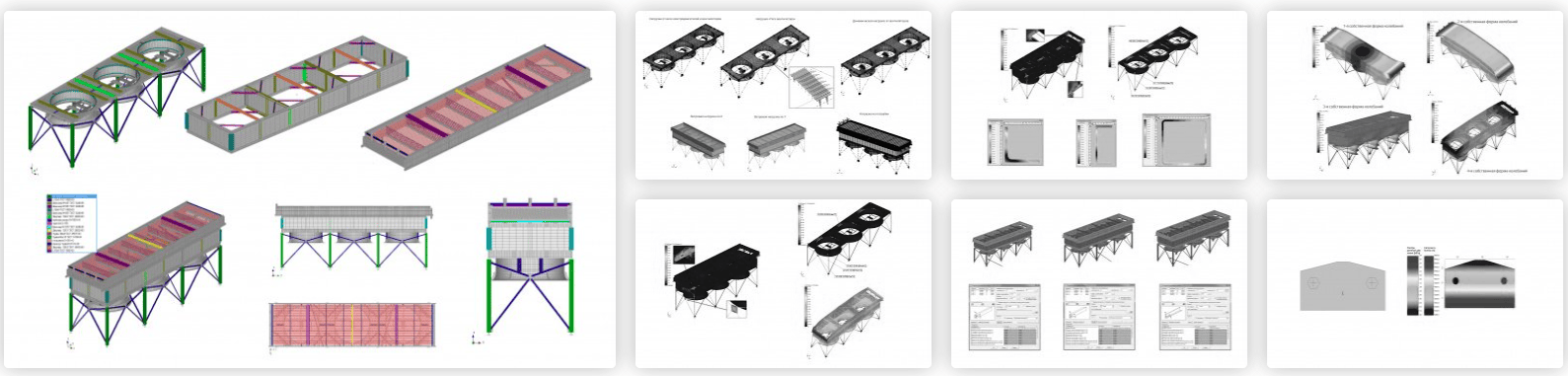
The design scheme of the metal structure of the air cooler was built in the APM Structure3D module on the basis of drawings submitted by the customer.
The elements of the metal structure of the air cooler were modeled using rod and plate finite elements.
The metal structure is hinged to the previously built foundation. There are a total of 8 control points in the model.
The design of the air cooler is calculated for the main combination of loads, consisting of constant, long-term and short-term loads.
The following were taken into account as design loads:
weight of the main metal structure;weight of electric motors and fans;wind loads on the metal structure;dynamic loads from the fan;loads on the manifold pipes;seismic loads.
Within the framework of the project under consideration, the following types of calculations were required:
strength calculation;determination of the stability of the form;calculation for seismic impacts;Calculation for dynamic effects.
UNIT III
Four Exmples from Text Book will be given trainingOn software listed For the program Four problem will be given for self training with software to Trainee
Calculation results
A static structural analysis, stability analysis, and seismic analysis were performed for four design cases (load case combinations). Maps of the stressed and deformed state of the structure were obtained.
The seismic analysis was carried out according to SNiP II-7-81*, taking into account 20 natural vibration forms.
The calculation of the foundation bolts, as well as the connection of the metal structure with the section module, was carried out.
The overall stability and load-bearing capacity of the structure were also checked.