Industry Projects
Construction Projects
RCC Structure Diesel Power Plant
Internship Program-Project Program-Product Dev, Program


UNIT I
Four Exmples from Text Book will be given trainingOn software listed For the program Four problem will be given for self training with software to Trainee
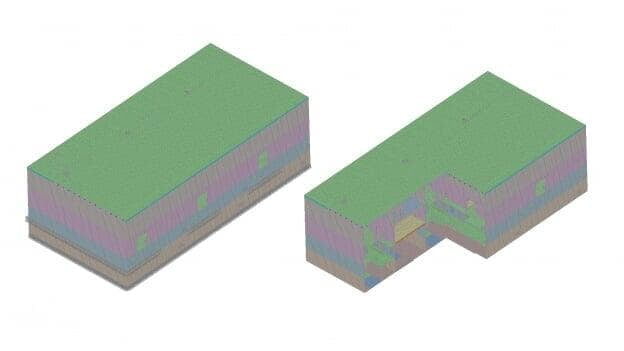
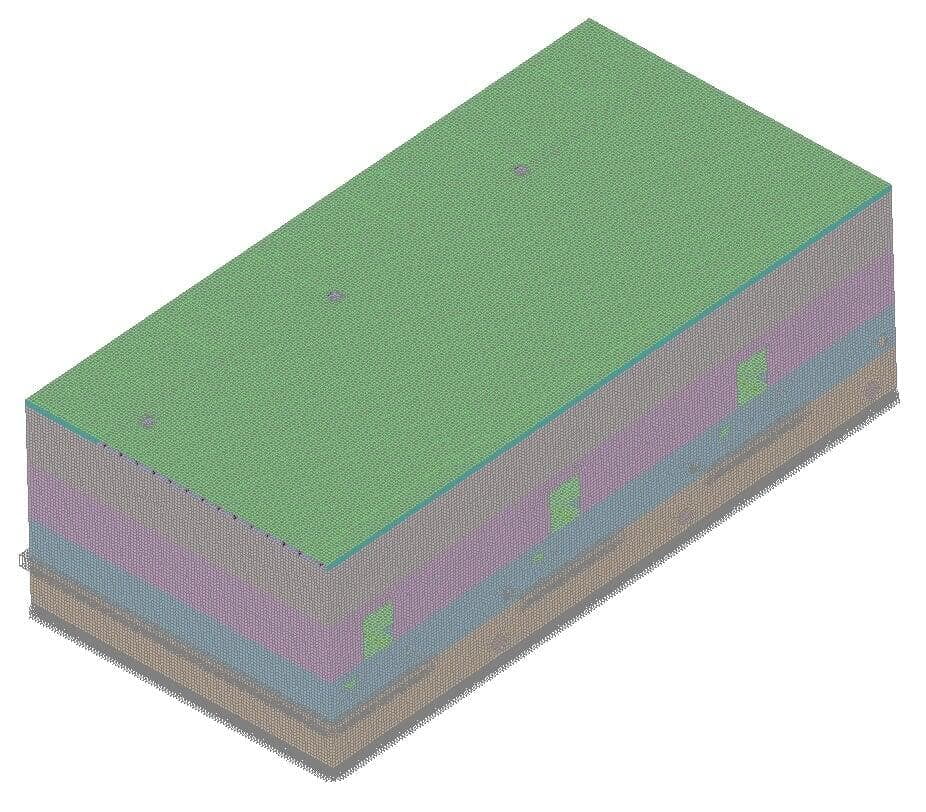
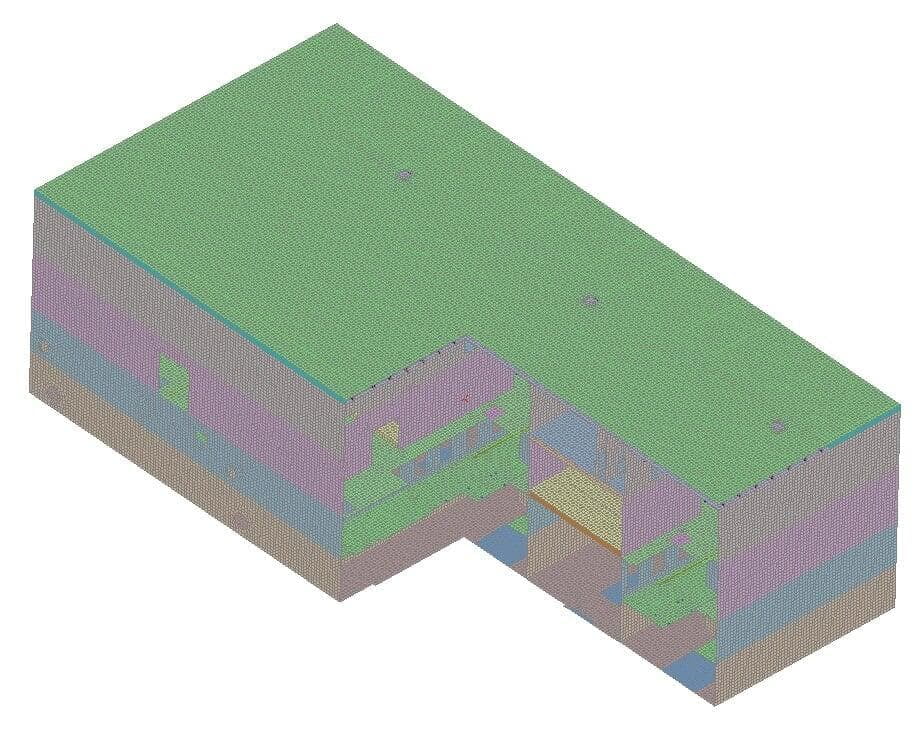
A standby diesel power plant (SDGS) is a rectangular building consisting of three cells with an identical space-planning solution.
The foundation of the SDGS building is a monolithic reinforced concrete slab.
The walls of the SDGF building are prefabricated monolithic reinforced concrete structures consisting of external prefabricated block cells and monolithic reinforced concrete filled between them.
The ceilings of the SDGF building are made of prefabricated monolithic in a non-removable formwork made of prefabricated ribbed shell slabs and monolithic.
The coating is also prefabricated monolithic slabs in a non-removable formwork made of prefabricated ribbed shell slabs.
The purpose of the calculation is to carry out the analysis for seismic effects.
UNIT IV
Four Exmples from Text Book will be given trainingOn software listed For the program Four problem will be given for self training with software to Trainee
The calculation model of the SDGF building was built in accordance with the formwork working drawings received from the Customer.
Reinforcement of the load-bearing structures of the reactor compartment building is set in accordance with the reinforcing working drawings.
Four-node and three-node plate finite elements were used to build the design model for the walls, floors, coating and foundation slab of the SDGF building. In the construction of steel beams and posts, rod finite elements were used.
Force boundary conditions on the structure of the RO building are set in accordance with the requirements of regulatory documents.
Kinematic boundary conditions are defined as a hinge fastening of the foundation slab nodes.
Calculation results
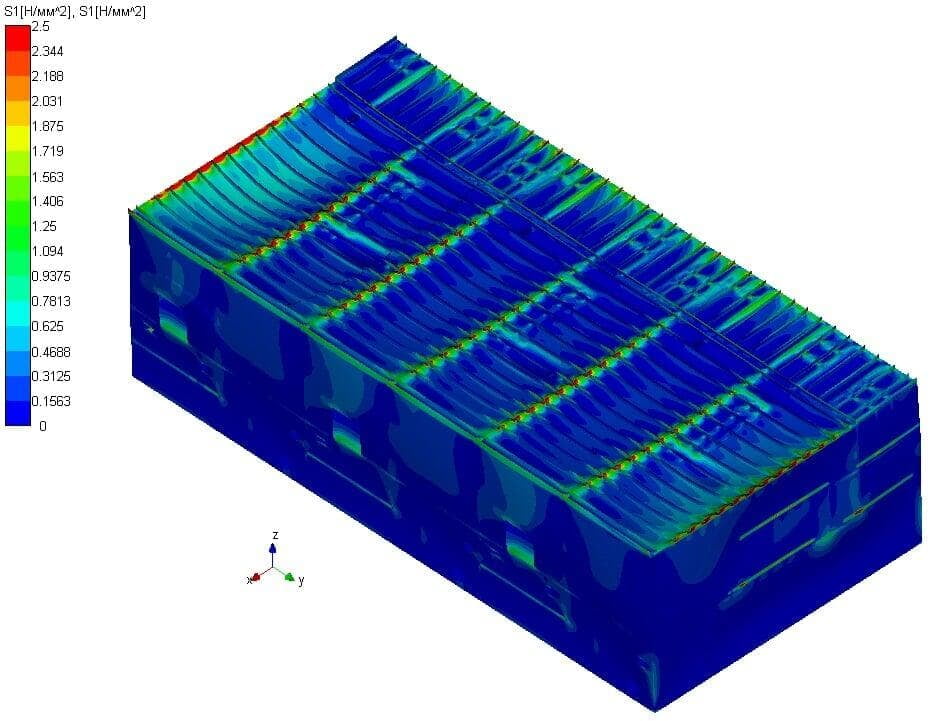
The calculation of the building of the backup diesel power plant for seismic effects is carried out in accordance with the requirements of NUREG/CR-0098, DBN V.1.1-12-201X, MT-T.0.03.326-13. The calculation is carried out by the linear-spectral method using the spectra of horizontal and vertical accelerations.
The natural frequencies and the corresponding oscillation shapes of the SDGF building were determined by the finite element method. The number of natural frequencies taken into account in the seismic action calculation was determined in accordance with the requirements of DBN V.1.1-12-201X.
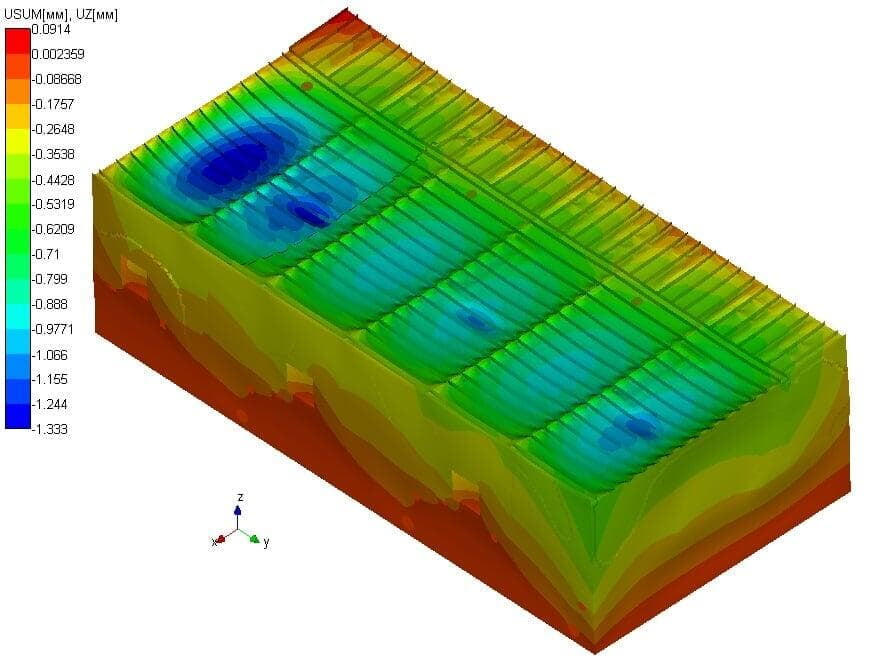
As a result of the calculation, the maximum main tensile stresses and vertical displacements of the SDGS building, as well as its elements, were determined.
The calculation of the vertical and horizontal reinforcement of the walls for the first group of limit states for each elevation is carried out.
The calculation for the second group of limit states is performed.
The calculation for seismic effects of the building of the backup diesel power plant was carried out in accordance with the requirements of DBN V.1.1-12-201X, MT-T.0.03.326-13 and DSTU B V.2.6-156:2010.
The work carried out showed the applicability of the APM Civil Engineering software package for solving complex problems of strength analysis of critical reinforced concrete structures.


UNIT II
Four Exmples from Text Book will be given trainingOn software listed For the program Four problem will be given for self training with software to Trainee
Reference manual "Design of retaining walls and basement walls" to SNiP 2.09.03-85 "Construction of industrial enterprises".DBN V.2.1-10-2009 "Bases and foundations of buildings and structures".DBN V.1.2-2:2006 "Loads and Impacts. Design Standards".NUREG/CR-0098 «Development of criteria for seismic review of selected nuclear power plants».DBN V.1.1-12-201X "Construction in seismic regions of Ukraine".MT-T.0.03.326-13 "Method of Computational Analysis of Seismic Resistance of Elements of Operating NPPs within the Framework of the Seismic Boundary Resistance Method".DSTU B V.2.6-156:2010 "Concrete and reinforced concrete structures made of heavy concrete. Design Rules".DBN V.2.6-198:2014 "Steel structures. Design Standards".
The calculation was carried out in the APM CivilEngineering software product.
UNIT III
Four Exmples from Text Book will be given trainingOn software listed For the program Four problem will be given for self training with software to Trainee
Loads on the SDGF building are accepted in accordance with the requirements of DBN V.1.2-2:2006, DBN V.1.1-12-201X, MT-T.0.03.326-13.
Seismic analysis is carried out in accordance with the requirements of DBN V.1.1-12-201X, MT-T.0.03.326-13.
The values of the strength characteristics of concrete and reinforcement were used, depending on the coefficient of working conditions, taking into account the features of the concrete and reinforcement in the structure. The coefficients of the working conditions of concrete and reinforcement are adopted on the basis of DSTU B V.2.6-156:2010.
The calculation took into account:
Constant loads
Own weight of load-bearing structures;The lateral pressure of the soil on the walls of the building is below the 0.000 mark.
Variable loads
1. Variable long-term loads
Weight of temporary partitionsStationary Equipment Weight
2. Variable short-term loads
Snow loadWind LoadCrane Load
3. Occasional loads
Episodic loads acting on SDGs include seismic impacts. The initial data for the calculation using the linear-spectral method are generalized response spectra (in this case, graphs of the dependence of the acceleration transmitted to the structure on the frequency of natural oscillations).
Load combinations for performing calculations for the first and second groups of limit states, as well as for calculating the HCLPF parameter (seismic boundary characteristic) are selected in accordance with the requirements of DBN V.1.2-2:2006, DBN V.1.1-12-201X, MT-T.0.03.326-13.
Verification of the limit states of the first group is carried out for an emergency combination of loads, including the limit design values of permanent, long-term and short-term variable loads, as well as loads from seismic impacts.
Verification of the limit states of the second group includes the calculation for the emergency combination, taking into account the operational design values of the loads.