Four Exmples from Text Book will be given trainingOn software listed For the program Four problem will be given for self training with software to Trainee
Overview
First introduced in 1977 and blessed by piping hydraulic world-known guru Idelchik, PASS/HYDROSYSTEM has since evolved into one of most powerful piping flow analysis tools.
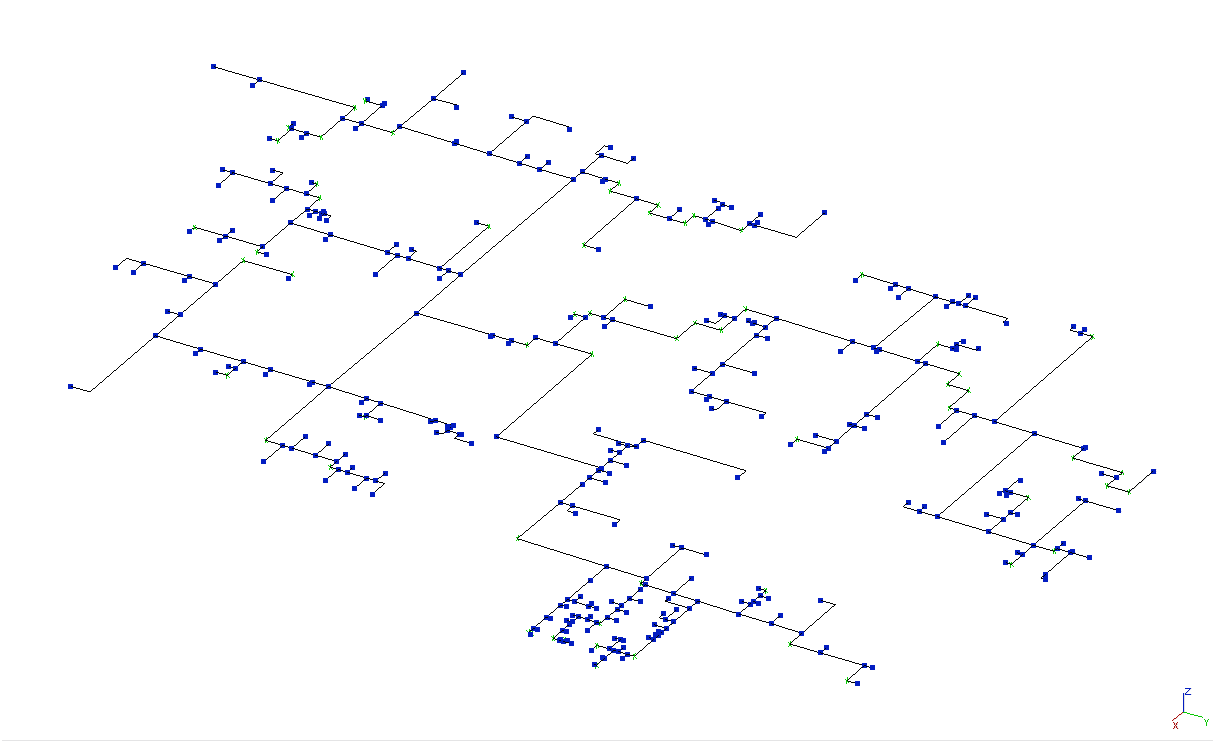
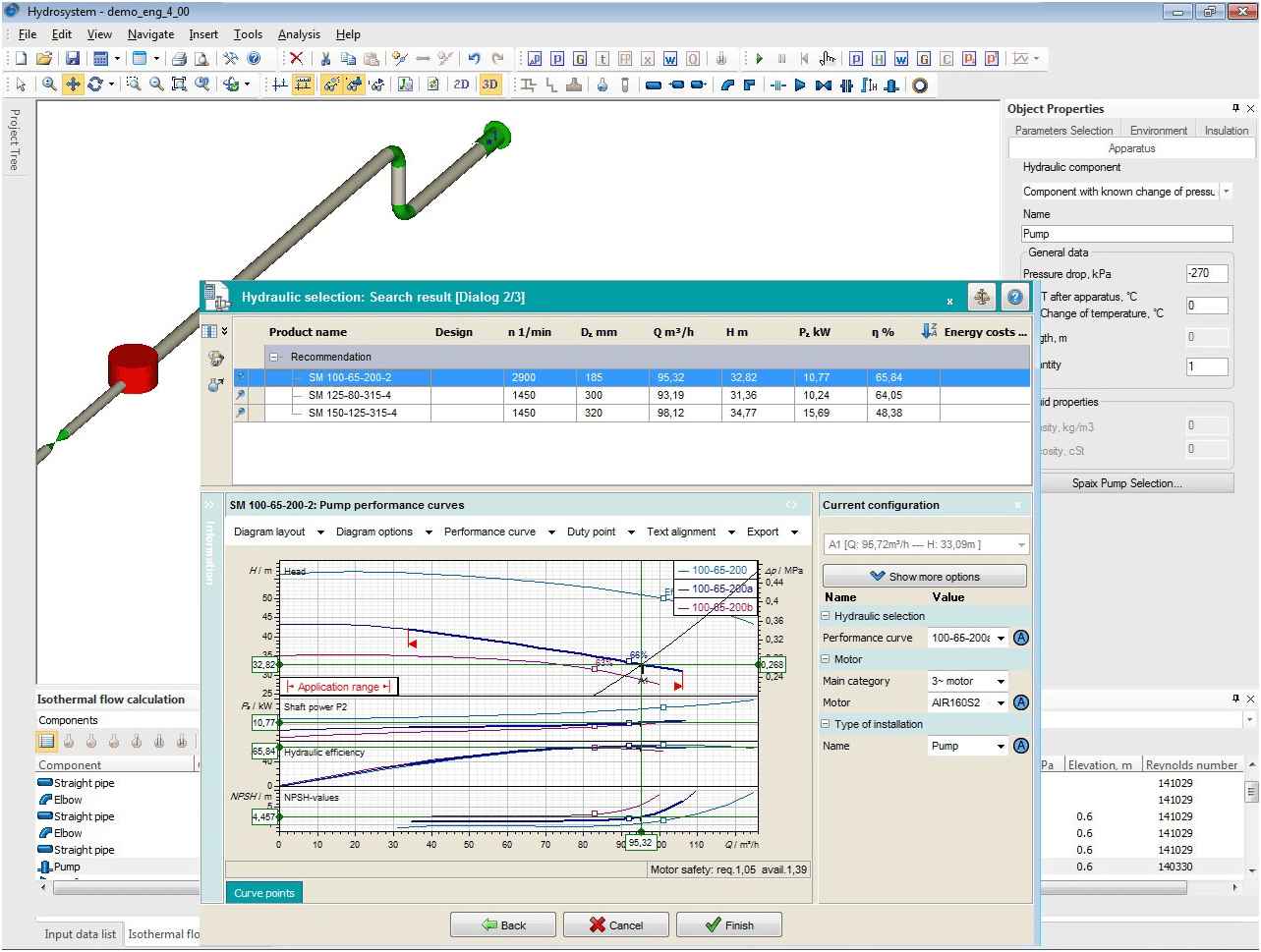
PASS/HYDROSYSTEM provides diameter selection, heat and hydraulic analysis of steady state flow for real liquids, gases, and multiphase mixtures (including gas/liquid, oil/water, and gas/oil/water flow considering flashing and condensation), in piping systems of any complexity, including networks with loops.
The following codes are implemented into Start-Prof software:
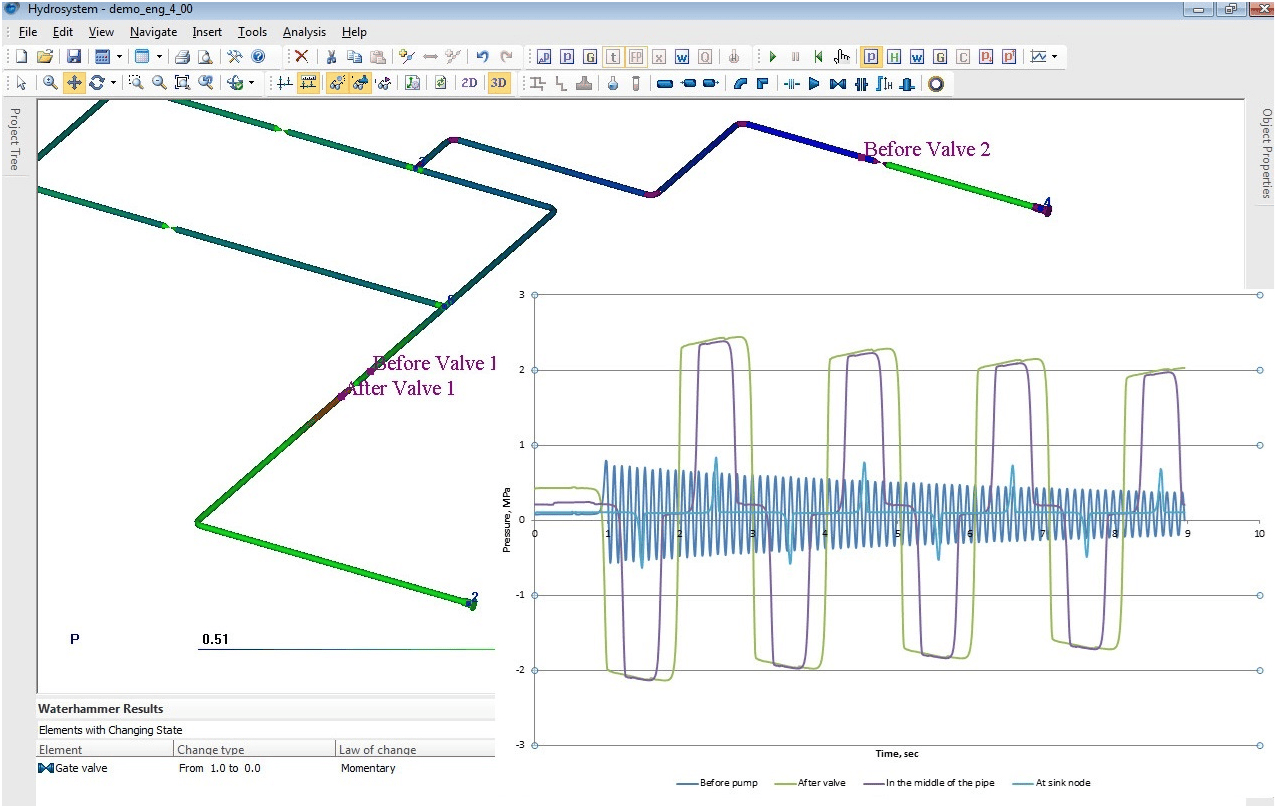
It also covers the most dangerous type of transitional flow related to liquid surge (water-hammer), and flow assurance calculations, including severe slugging, and gas hydrate formation predictio
PASS/HYDROSYSTEM combines sophisticated calculation capabilities with ease-of-use to deliver fluid flow and heat transfer simulation and sizing of any piping network in any design stage by “regular” engineers and designers. Process and piping engineers of more than 600 companies use the software now every day.
Four Exmples from Text Book will be given trainingOn software listed For the program Four problem will be given for self training with software to Trainee
Configurations
Configurations
PASS/HYDROSYSTEM can be delivered in different configurations to evaluate the piping pressure and thermal effects.
PASS/HYDROSYSTEM Complete
provides comprehensive hydraulic and thermal analysis and related sizing calculations for piping systems of any complexity.
PASS/HYDROSYSTEM Pressure&Heat
provides simulation and sizing of any piping network for single phase steady state flow and thermal conditions.
PASS/HYDROSYSTEM Pressure
provides simulation and sizing of any piping network for pressure effects related to single phase steady state flow conditions.
The PASS/ADD Multiphase module provides analysis of multi-phase flow in piping systems.
The PASS/ADD Surge module provides analysis of liquid transient flow in piping systems.
The PASS/ADD Solid Phase module provides analysis of settling slurry flo
Four Exmples from Text Book will be given trainingOn software listed For the program Four problem will be given for self training with software to Trainee
Features and Advantages
To analyze a piping system for hydraulic and thermal effects it is necessary to simulate its behavior on three scale levels: pipe cross section, pipe/branch run, and the whole piping network – and then link and solve these models together.
At the cross-sectional scale it is necessary to define the type of fluid flow (laminar, turbulent, choked, or subsonic, flow pattern for multiphase flow – stratified, annular, intermitted, etc.), and the specifics of heat exchange between fluid and environment through pipe wall and thermal insulation. This knowledge is then used when calculating integral parameters of the flow and heat exchange (pressure gradient, heat losses per length, etc.) and following up how all fluid parameters change along the pipe/branch and all over the network. This would be impossible without access to most reliable thermodynamic data provided by software.
PASS/HYDROSYSTEM provides a calculation engine for all necessary fluid properties and phase equilibrium on the base of fluid composition, for a wide spectrum of fluids and applications.
The proprietary Properties library provides quick property calculation of ~150 most often used organic and non-organic components and their mixtures.
The proprietary STARS library is focused on applications in the refining and petrochemical industry and allows for calculation of properties for individual fluid components, oil fractions and their mixtures in liquid and gas phases. This database contains more than 1600 components. STARS can also automatically compute gas-liquid phase equilibrium and check the validity of fluid phase entered.
The GERG-2008 library allows calculation of natural gas thermodynamic properties and gas-liquid phase equilibrium based on the popular GERG-2008 equation of state.
The WaterSteamPro module provides accurate calculations of water and steam fluid properties on the basis of IAPWS-IF97 equations.
INTEGRATION
UNIT III
Four Exmples from Text Book will be given trainingOn software listed For the program Four problem will be given for self training with software to Trainee
Four Exmples from Text Book will be given trainingOn software listed For the program Four problem will be given for self training with software to Trainee
For more advanced fluid properties and phase equilibrium calculations the program can use the Simulis Thermodynamics library by ProSim S.A.. This library covers Oil and Gas, Chemical, Biochemical, and other industries and provides a wide range of modern methods of physical properties, gas-liquid, and liquid-liquid phase equilibrium calculation for mixtures of more than 3000 compounds and oil fractions.
For hydrate formation prediction the program can use the Hydrate Open Structure module of the PVTSim library by Calsep, which can be purchased as a separate product.
PASS/HYDROSYSTEM uses the most advanced models/algorithms and libraries for all level of simulation (both proprietary and from the most famous researchers/ developers from all over the world).
This includes minor loss correlations by Idelchik, Miller, Ito; multiphase flow models by Chisholm, Friedel; drift-flux model, mechanistic models by Taitel, Barnea and Tulsa University Fluid Flow Project research group (with automatic closure relations selection); Settling slurry flow DHLLDV framework model by Delft University of Technology; Todini Global Gradient Algorithm for network solver; Powell derivative-free method for optimization; and many others.
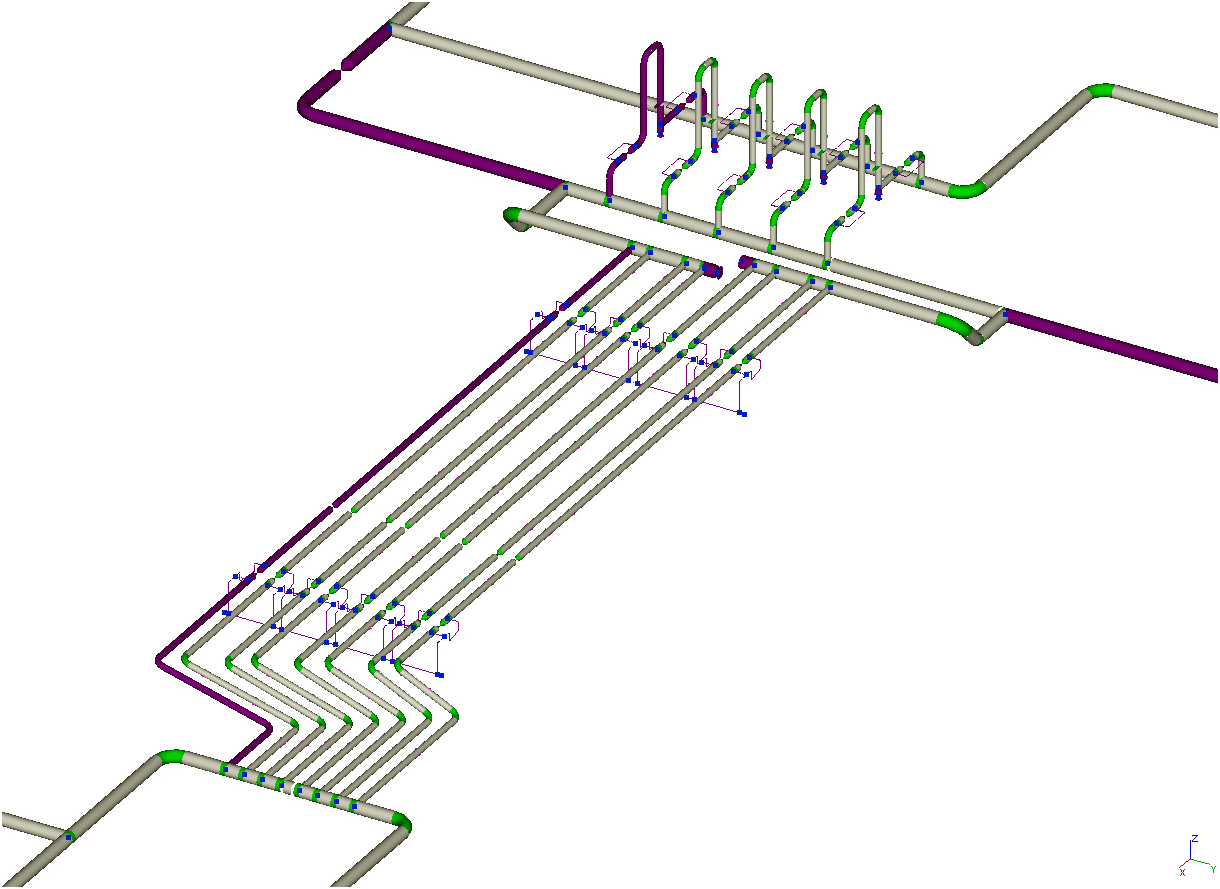
The program also calculates very complex networks with flow rate control elements and helps users analyze those networks with visual topology analysis features.
Slug flow parameters (size, frequency, speed of slugs, etc.) for gas-liquid flow can be calculated and reported using TUFFP Unified model. Forces in elbows and flow-turns caused by gas-liquid slug flow are calculated and can be exported to PASS/START-PROF software for accounting them in piping stress analysis.
The PASS/ADD SURGE module implements the classical method of characteristics (MOC), using Riemann invariants and explicit numerical methods. It also considers possible cavitation during transitional flow, taking into account both, column separation effect and distributed vaporous cavitation. Unbalanced waterhammer induced forces on appropriate elements/nodes are calculated and transferred to PASS/START-PROF or other piping stress analysis programs.